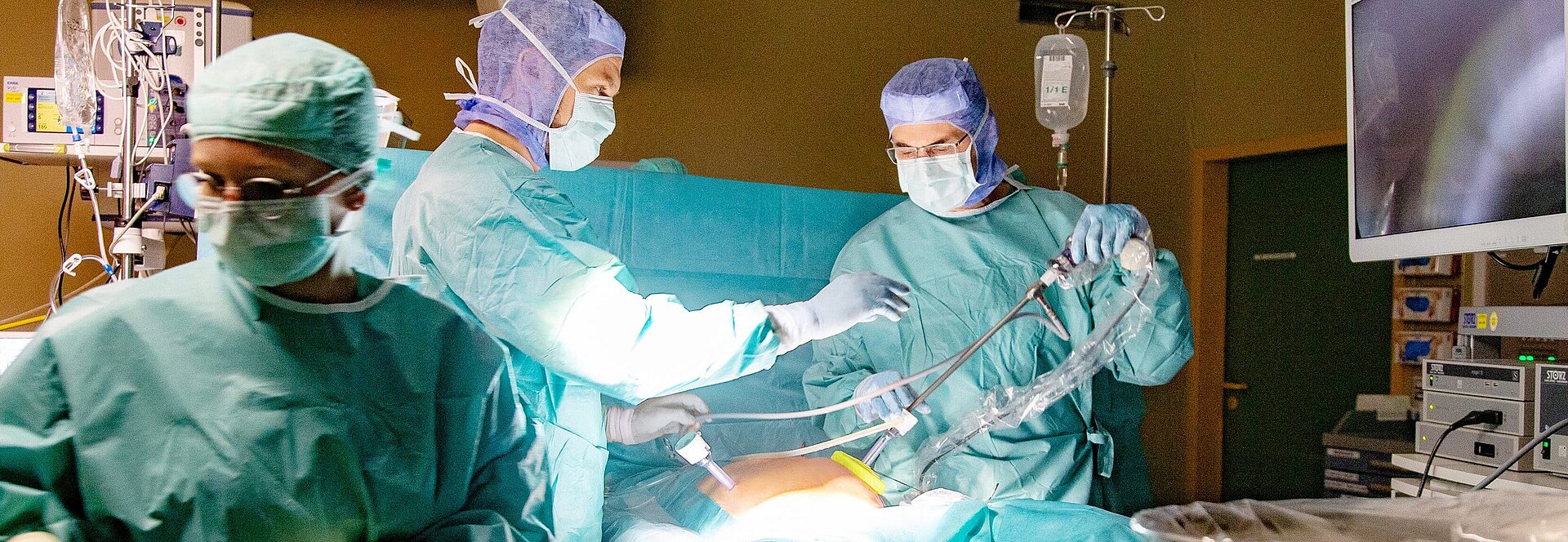
Colorectal Cancer Center Rüsselsheim
With nearly 60,000 new cases diagnosed each year in Germany, colorectal cancer is the second most common form of cancer. If diagnosed early and treated with a regimen tailored to the individual patient, the chances of recovery are good today.
The Interdisciplinary Colorectal Cancer Center is a facility dedicated to improving patient care and research at the GPR Clinic in Rüsselsheim.
Focal points of treatment
The goal of the Colorectal Cancer Center is to improve:
- Early detection
- Diagnosis
- Treatment
- Follow-up care
... for benign and malignant colorectal diseases.
Downloads on the topic
How does colorectal cancer develop?
Cancer cells develop from healthy body cells. This is caused by changes (mutations) in the genetic material that can lead to uncontrolled cell growth. The growth and division of cells are normally subject to strict control by the body. When this control no longer functions, cancer cells can continue to multiply. The causes of mutations are varied. There are inherited mutations, those caused by external factors, and those that occur spontaneously.
In most cases, colorectal cancer tumors develop from colorectal polyps. These can remain benign for years, but can also develop into a malignant tumor—this usually happens gradually over a period of five to ten years.
Since the human body’s ability to correct errors in genetic material declines with age, the number of people affected increases as they get older. Before the age of 55, only about ten percent of people develop colorectal cancer. However, genetic changes can also be inherited. In such cases, genetic damage accumulates much more rapidly, and the disease can develop even at a young age.
A genetic, familial predisposition is present in about 30% of all people affected by colorectal cancer. Since direct relatives have an increased risk of also developing colorectal cancer, the issue concerns the entire family.
Early Detection
Starting at age 50, every insured person in Germany is entitled to regular screenings for the early detection of colorectal cancer.
As part of the statutory colorectal cancer screening program in Germany, individuals with health insurance between the ages of 50 and 54 can undergo an annual stool test. Starting at age 50, individuals are also entitled to a colonoscopy as part of the screening program. If the results are normal, a repeat colonoscopy is recommended after ten years. Alternatively, insured individuals can opt to have a stool test every two years starting at age 55.
Diagnosis
If symptoms are present, a colonoscopy should be performed regardless of age.
Symptoms include, among others:
- Pain
- Tendency toward constipation
- Blood or mucus in the stool
If a stool test raises suspicion of colorectal cancer, a colonoscopy should be performed by a specialist in gastrointestinal diseases (gastroenterologist) for further evaluation. If abnormal findings are detected during the procedure, tissue samples may be taken to diagnose a possible cancer.
At the Colorectal Cancer Center, we work closely with private practices. If colorectal cancer is diagnosed there, patients can be referred to our clinic. Appointments for our clinic can be scheduled through the administrative offices of the hospitals affiliated with the Colorectal Cancer Center.
Scheduling an Appointment for a Consultation
Visceral Surgery Phone: 06142 88-3248
Oncology Phone: 06142 88-1024
Gastroenterology Phone: 06142 88-1864
Radiology Phone: 06142 88-1500
Radiation Therapy Phone: 06142 79448-0
Therapy
During a consultation, prospective patients will discuss, among other things, the various treatment options for colorectal cancer. In addition to interdisciplinary treatment plans, we also offer services related to social and nursing care.
Through interdisciplinary collaboration among specialists in the fields of
- visceral surgery
- Gastroenterology
- Hematology-Oncology
- Radiology
- Radiation therapy, and
- Pathology
appropriate treatments can be offered and optimally coordinated through collaboration.
Follow-up Care
Depending on the findings of the examinations, the surgical findings, and the pathological examination of the tumor, a tumor stage is determined. During the interdisciplinary tumor board meeting, a recommendation for follow-up care is made based on this tumor stage, tailored individually to the patient. In a subsequent consultation, the recommendation is discussed with the patient and then communicated to the patient’s primary care physician.
Clinical Trials
If you would like to participate in a clinical trial, you will find an overview of all currently ongoing trials below. If you are interested or have further questions, please contact us or write to us; we will be happy to assist you. Contact addresses and points of contact can be found on the corresponding information sheet.
Our experienced and qualified interdisciplinary team at the study center is responsible for coordinating and organizing the studies.
Clinical Trials - Colorectal Cancer:Overview
of Trials Across All Departments
Management & treatment partners


Outpatient clinics & appointments
Make an appointment for a consultation:
| Visceral Surgery | Phone: 06142 88-1348 |
| Oncology | Phone: 06142 88-1024 |
| Radiology | Phone: 06142 88-1500 |
| Gastroenterology | Phone: 06142 88-1864 |
| Radiation Therapy | Phone: 06142 79448-0 |
Our doctors and other staff members are available to assist you during office hours.
Information for referrers
Optimal coordination among all treatment partners
The Interdisciplinary Colorectal Cancer Center is a facility dedicated to improving patient care and research at the GPR Clinic in Rüsselsheim.
With over 60,000 new cases per year (Robert Koch Institute 2010), colorectal cancer is the second most common cancer in Germany. To ensure optimal treatment for our patients, interdisciplinary and quality-assured collaboration is essential.
The primary goal of colorectal cancer centers is to ensure optimal coordination among all parties involved in the treatment process to facilitate the comprehensive implementation of the S3 guidelines.
How can we help you?
Use various methods to contact us directly.
- by email to: dkz@~@gp-ruesselsheim.de
- by phone at: 06142 88-3248
We will respond to your inquiry as soon as possible.
Early Colonoscopy for Your Patients with Suspected Colorectal Cancer
Prompt evaluation of specific symptoms suggestive of colorectal cancer is a crucial step in ensuring patients receive appropriate treatment in a timely manner.
Therefore, we can schedule a colonoscopy for such patients within two weeks of your telephone referral. All that is required beforehand is a simple assessment of the symptoms by you using the symptom checklist below:
Does your patient have one or more of the following symptoms?
- visible blood in the stool
- Palpable resistance during a digital rectal exam
- significantly altered bowel habits with pencil-thin stools and newly
- constipation
If so, please schedule them directly with us for an expedited colonoscopy by calling 06142 88-3248 or through the senior physician’s office at the 1st Department of Internal Medicine.
Tumor Conference
Every Thursday at 3:30 p.m., an interdisciplinary tumor conference is held at our facility, during which, among other things, all patients with colorectal cancer are presented and discussed.
If patients whom you have referred or whom you are co-treating are to be discussed at the Tumor Conference, we would like to cordially invite you to attend.
If you wish to present a patient with colorectal cancer yourself, please register them in advance using our fillable PDF form (available for download) via the feedback system.
Please send us your completed registration form:
- by email: dkz@~@gp-ruesselsheim.de or
- by fax: 06142-881647
Downloads on the topic
Our weekly tumor board meeting takes place at GPR Klinikum every Thursday at 3:30 p.m.

Studies
Medical Director
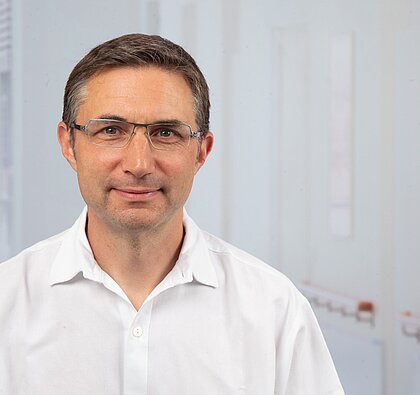
Dr. med. Lars Leupolt
Tel.
06142 88-3248
Fax
06142 88-1674
leupolt@gp-ruesselsheim.de

Medical coordinator
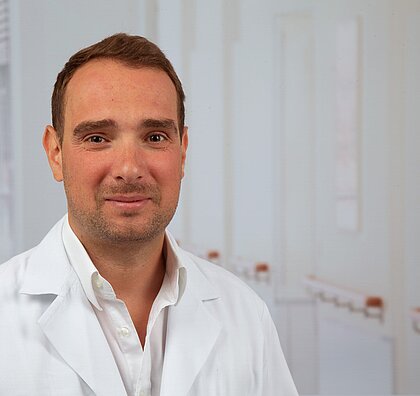
Dr. med. Oliver Kalbhenn
Tel.
06142 88-3248
Fax
06142 88-1674
kalbhenn@gp-ruesselsheim.de

Interdisciplinary cooperation
- General, Visceral,
and Thoracic Surgery -> More Information Department of Internal Medicine -> more information
Radiology -> more information
Radiation Therapy -> more information
Anesthesiology -> more information
Social Services -> more information
Transition to Home Care -> more information
PhysioFit -> more information
Case Management -> more information
Hospital Chaplaincy -> more information
GPR Academy -> more information
Self-Help Group -> more information
Hospice Care -> more information
Palliative Care -> more information