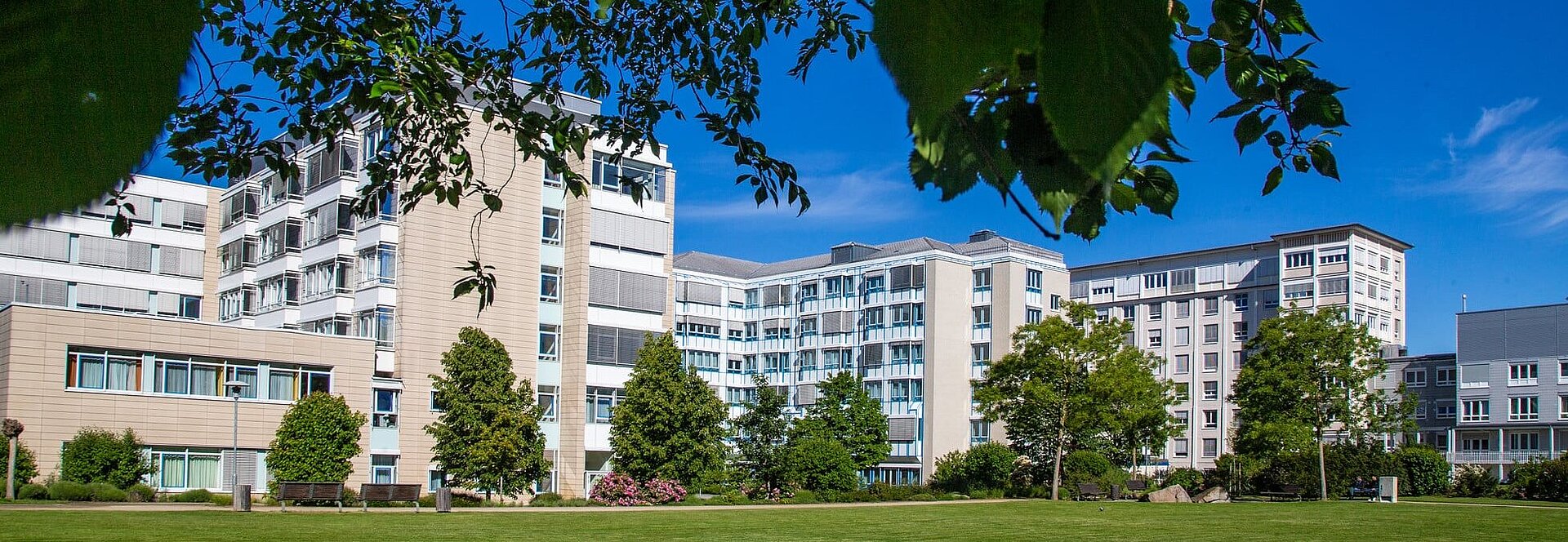
Chest Pain Unit
In October 2011, a Chest Pain Unit (CPU) was established in the emergency department of the GPR Clinic. The CPU is affiliated with the Second Department of Internal Medicine, headed by Chief Physician PD Dr. Oliver Koeth.
Focal points of treatment
- 24-hour on-call service
- Cardiac catheterization
- Round-the-clock care
- Monitoring
- Non-invasive blood pressure measurement
- External pacemaker
- Portable ventilator
All patients with acute chest pain should be referred to this central emergency department at the hospital for rapid diagnosis and treatment. This is crucial because acute chest pain can mask life-threatening conditions such as heart attack, pulmonary embolism, or aortic dissection or rupture. For all these conditions, rapid detection and treatment are life-saving. Less severe cases should be evaluated in the CPU to the extent that discharge may be possible after just a few hours. The Chest Pain Unit is distinguished by a specially trained team of physicians and nurses who care for patients around the clock. In addition, numerous spatial and equipment requirements are associated with establishing a Chest Pain Unit. Beds with monitoring capabilities (monitoring) and non-invasive blood pressure measurement must be available, as well as an external pacemaker, transport monitors, and a portable ventilator. In addition to general clinical examination, laboratory tests, ECG, echocardiography, and computed tomography are immediately available. Of paramount importance is the 24-hour availability of an experienced team for cardiac catheterization diagnostics and therapy, which has been an integral part and a focus of the II. Medical Clinic since 2004.
Especially in the case of a heart attack, the fastest possible diagnosis and treatment are of particular importance. With every minute lost, heart muscle tissue is irreversibly lost. The sooner blood flow to the heart muscle can be restored, the more patients can survive the heart attack and the less severe any subsequent symptoms—such as fatigue or shortness of breath—will be.
Valuable time is often lost because patients wait too long before calling emergency services. If symptoms suggest a heart attack, the emergency dispatch center should be called immediately at 112. Time and again, patients do not want to seek help at night because, out of well-intentioned but in this case misguided consideration, they wish to wait until the next morning. The consequences are even more severe when patients do not seek help on weekends and wait until the next business day. Unfortunately, by then the critical window of opportunity during which heart muscle tissue can be saved has often passed. The consequences for patients are often permanent disabilities, such as low or very low exercise tolerance.