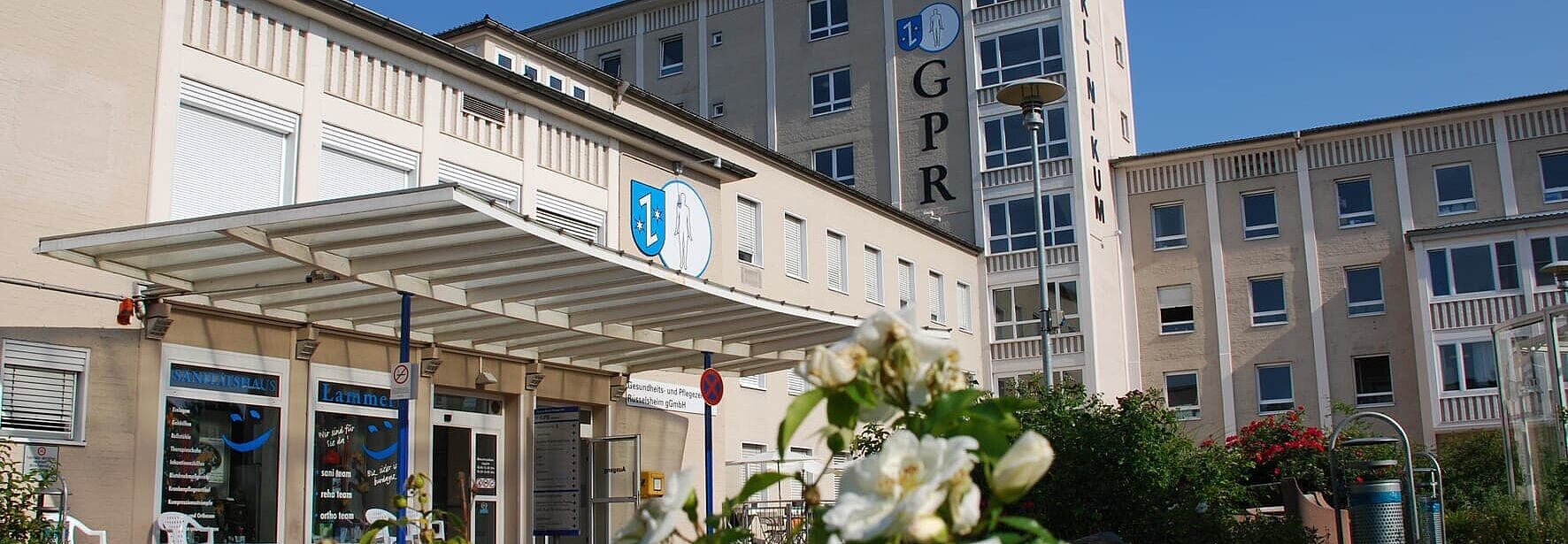
Myoma Center at the GPR Clinic
As a center for fibroid treatment, we provide patients with fibroids in the region with a wide range of treatment options. We are also the first hospital in the Rhine-Main region to offer the Sonata treatment, which finally allows us to provide care close to home for women with fibroids from Rüsselsheim, the Groß-Gerau district, Mainz, Wiesbaden, Darmstadt, Frankfurt am Main, Offenbach, Bad Homburg, and all other surrounding communities.
Myomas
What are uterine fibroids?
Fibroids are common. They are benign muscle growths (not cancer) in or around the uterus and range in size from a grape to a grapefruit.
Symptoms occur in 20–50% of women with fibroids1,which can be uncomfortable, including heavy menstrual bleeding and menstrual cramps. Sometimes fibroids are even the reason why a woman is unable to conceive. If fibroids are left untreated, these symptoms can worsen over time.

Symptoms of fibroids
- Heavy and/or prolonged menstrual bleeding
- Pain, pressure, or swelling in the abdominal area
- More frequent urination than usual
- Constipation
- Infertility
- Pain during sexual intercourse
How are fibroids treated?
Determining the right treatment for fibroids can vary depending on the type, size, and location of the fibroid.
Common treatment methods include:
- transcervical radiofrequency ablation using the Sonata® procedure
- medication / hormonal therapy
- Myomectomy (surgical removal of fibroids)
- Uterine artery embolization
- Hysterectomy (surgical removal of the uterus)
Fibroid Treatment with the Sonata® Procedure
The Sonata® procedure can be used to treat most types of fibroids.2 The method is non-invasive and, according to clinical studies, safe and effective for treating symptomatic fibroids.2 During the procedure, the doctor inserts the Sonata device into the uterus through the vagina. Individual fibroids are located and targeted using an intrauterine (inside the uterus) ultrasound.
Once the fibroid has been precisely located, a needle-shaped electrode is inserted into the mass. An electric current is then delivered, heating the tissue within the predefined zone and thereby ablating it. The surrounding tissue is not damaged, as a safety margin is maintained. The delivery of radiofrequency energy causes the fibroids to shrink, thereby reducing symptoms over the long term. Since the fibroids are treated from inside the uterus, Sonata® therapy requires no incisions in the abdominal area and no cutting or surgical removal of tissue. The body subsequently breaks down the fibroid on its own. The uterus is preserved, and the possibility of pregnancy is not ruled out.
Results of Sonata® Treatment
- A quick return to life’s simple pleasures 2
- 96% of patients reported an improvement in symptoms 12 months after Sonata® treatment 2
- 92% of patients did not require further surgical intervention for heavy menstrual bleeding even 3 years after Sonata® treatment 3
Fibroid Treatment at Our Clinic
If you have been diagnosed with fibroids that are causing you problems, please feel free to come see us with your referral! We will explain in detail the advantages, disadvantages, and risks of each treatment method and then create a personalized treatment plan for you based on your medical findings and your preferences.
Indications and Safety Information
Intended Use
The Sonata System is intended for diagnostic intrauterine imaging and for the transcervical treatment of symptomatic uterine fibroids, including those associated with heavy menstrual bleeding.
Contraindications
Current pregnancy; active pelvic infection; known or suspected gynecological malignancy or premalignant conditions such as atypical endometrial hyperplasia; presence of at least one tubal implant for sterilization purposes; and presence of an intrauterine device (IUD), unless it is removed prior to insertion of the Sonata treatment device.
Patient Selection
Considerations Safety and efficacy with regard to fertility and fecundity following use of the Sonata System have not been established. As a uterine-preserving alternative to hysterectomy, treatment with the Sonata System does not preclude the possibility of pregnancy.
Possible Postoperative Events and Risks
Expected postoperative events include: pain/cramping in the abdominal and pelvic regions; back pain; constipation; dizziness/fatigue; headache; fever; malaise; inflammatory symptoms following ablation; nausea/vomiting; scabbing and, less commonly, expulsion of ablated myoma tissue in its entirety through the vagina (particularly following ablation of submucosal myomas), as well as vaginal spotting/bleeding/dysmenorrhea.
Possible risks associated with myomectomy using the Sonata System include: allergic reactions (including rash) to product materials; perforation of the intestine or bladder; cervical/vaginal laceration or tear; dysmenorrhea; electric shock; hematometra; bleeding; infections: major and minor local and systemic infections, including intrauterine infection; retention of a product fragment; skin burns due to the spread of radiofrequency energy; thrombotic events; accidental injury to the uterus, cervix, or vaginal vault, adjacent organs, or adjacent tissue; unknown risk to future pregnancies; and complications, including death.
For more information about the Sonata® system, visit SonataBehandlung.de
References
1 Stovall DW., Clin Obstet Gynecol. 2001;44:364–71
2 Chudnoff S, et al. SONATA Trial: Ultrasound-Guided Transcervical Ablation of Uterine Leiomyomas. Obstet Gynecol. 2019 Jan; 133(1): 13-22
3 Miller CE, Osman KM. Transcervical Radiofrequency Ablation of Symptomatic Uterine Fibroids: 2-Year Results of the SONATA Pivotal Trial. J Gynecol Surg. 2019;35:345-349.
Strong period
Symptoms and Causes of a Very Heavy Period
A very heavy period can have many causes and is characterized by frequent or heavy bleeding that requires constant changes of sanitary products. A distinction is made between hypermenorrhea, which is excessive menstrual bleeding; menorrhagia, which is a menstrual period that lasts too long; and polymenorrhea, which is menstrual bleeding that occurs too frequently. Heavy menstrual bleeding can lead to iron deficiency and anemia, which can often leave you feeling exhausted in your daily life.
Signs of a very heavy period
Do you feel like your period might be abnormally heavy because it makes you feel very limited in your daily life?
The following points could be signs of a period that is too heavy:
- You change your menstrual products every 3 hours or more frequently, and even at night, to prevent leakage
- When using a menstrual cup, you measure more than 80 ml of blood loss per period
- Your period lasts longer than 8 days
- Your cycle is shorter than 24 days
- Your period sometimes comes completely unexpectedly
- You pass large blood clots during your period
Not sure if this applies to you?
Then the Period Check at starkeperiode.de can help you.
What are the causes of very heavy menstrual bleeding?
Very heavy menstrual bleeding can be a symptom of an underlying condition and has many causes. According to FIGO (International Federation of Gynecology and Obstetrics), these are divided into 9 categories.
The PALM-COEIN classification first distinguishes between two groups: structural disorders, which can usually be diagnosed using imaging techniques or tissue samples (PALM), and non-structural disorders, where this is not the case (COEIN). But what exactly do these letters stand for?
PALM – Structural Causes
Polyps
Polyps are benign growths of the uterine lining that protrude into the uterine cavity.
Adenomyosis
In adenomyosis, cells from the uterine lining grow in clusters or scattered throughout the uterine wall.
Fibroids (Leiomyomas)
Fibroids are benign tumors consisting of muscle cells from the uterus.
Malignancies and hyperplasias
Malignant tumors (cancer) as well as enlargements of tissue or organs due to cell proliferation can cause heavy menstrual bleeding.
COEIN – non-structural causes
Coagulopathies (coagulopathy)
Coagulopathies are better known as blood clotting disorders. These often manifest as increased nosebleeds and bleeding gums or prolonged bleeding from wounds.
Ovulation
Disorders Disorders of ovulation can affect hormonal balance and thus cause heavy periods.
Endometrial
pathologies Endometrial pathologies are also referred to as disorders of the uterine lining.
Iatrogenic causes
Sometimes heavy periods occur as part of a disorder caused by one or more medical treatments.
Unclassified causes
Some causes of heavy menstrual bleeding have not yet been sufficiently investigated or defined, or have not yet been identified.
Management & Team


Outpatient clinics & appointments
Clinic Hours
To schedule an appointment for the fibroids consultation, please call
06142 88-1316 or 06142 88-4901
Coordinator

Asli Yilmaz
Tel.
06142 88-4901
Fax
06142 88-1223
yilmaz@gp-ruesselsheim.de