Clinical hygiene
Hospital hygiene has become increasingly important in recent years. The COVID-19 pandemic, in particular, has shown us just how important and essential it is to protect against infections and prevent the spread of pathogens.
Advise, Combat, Educate
In addition to providing high-quality medical care, preventing infections during patients’ stays and treatments is a top priority for us at the hospital. The safety of our patients is of the utmost importance to us.
That is why GPR Klinikum Rüsselsheim has extensive structures and facilities in place to ensure our patients have a safe experience during their time in the hospital. Especially for people requiring nursing care and patients with compromised immune systems, infections can sometimes be difficult to treat.
Consequently, it is particularly important to all healthcare providers in the hospital to prevent the transmission and spread of bacteria and viruses, or at least to limit them to a minimum.
Clean Work – Our Hygiene Management at GPR Klinikum Rüsselsheim
The staff of our Clinical Hygiene Department focus exclusively on issues of hygiene, infection prevention, and the containment of existing outbreaks. In this way, they work to ensure that potential infections are prevented during medical, diagnostic, therapeutic, or nursing procedures.
This is done based on comprehensive guidelines and recommendations, such as those from the Robert Koch Institute and the Hessian Hygiene Ordinance. Also essential are the provisions of the Infection Protection Act regarding compliance with the currently scientifically recognized rules of hygiene.
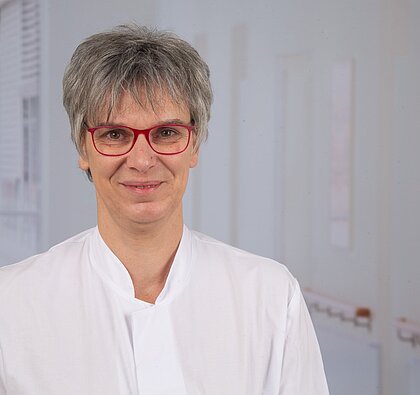
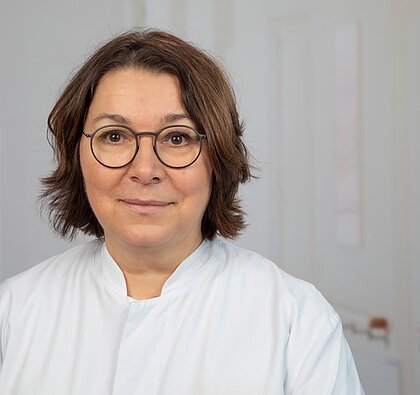
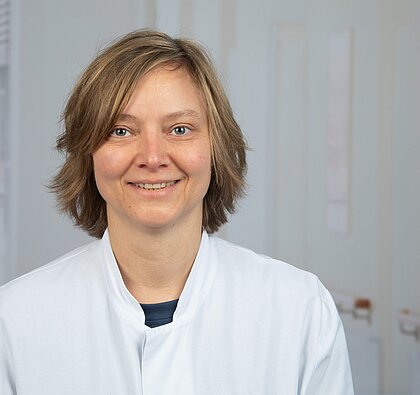
The regular training of our employees and providing guidance in their daily work are important functions carried out by our hygiene team—consisting of a hospital hygienist and hygienespecialists.
The team is supported by trained physicians designated as hygiene officers (currently 19 individuals) as well as nursing staff designated as hygiene officers (currently 26 employees). Hygiene-related developments are evaluated and work in this area is discussed during monthly meetings. Twice a year, the Hygiene Commission assesses the state of hygiene and the corresponding data, as the type and number of hygiene-relevant microbial findings are regularly recorded and the occurrence of infections is documented, particularly in national and regional surveillance programs such as the Hospital Infection Surveillance System (KISS).
Through regular hygiene inspections, the scope and quality of hygiene measures are reviewed and documented in many areas of medical care.
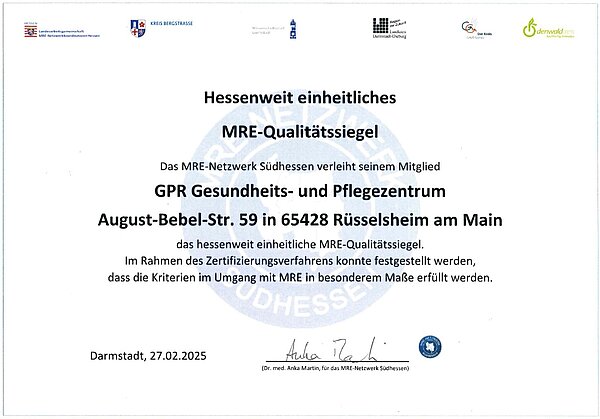
Exchanges with other hygiene teams—both regionally (Public Health Department, MRE Network Rhine-Main) and nationally (Clean Hands Campaign)—also contribute to the continuous improvement and expansion of hygiene management, as modern medicine and the success of its interventions are increasingly threatened by infections that are difficult or nearly impossible to treat. Germs that are resistant to many—if not all—available antibiotics (MRSA, multidrug-resistant germs such as MRGN or VRE) can lead to serious complications during treatment, which in some cases are even untreatable.
For this reason, monitoring and managing the use of antibiotics is of particular importance at GPR Klinikum Rüsselheim (rational antibiotic therapy). For this reason, specially trained physicians (ABS experts) have been active for several years in a so-called Antibiotic Stewardship Team to support their colleagues with infectious disease-related issues.
Good hygiene ensures the success of our medical services
The goal of the hygiene team’s commitment and work is to protect patients and staff at GPR Klinikum Rüsselsheim and its affiliated facilities—such as the Medical Care Center (MVZ), the Outpatient Care Team, and the Senior Residence—from infections wherever possible. This is reflected in the daily routine of hospital operations as well as in food safety monitoring, the reprocessing of medical instruments, the inspection of ventilation systems, and water hygiene.
We are well-equipped to meet the growing challenge of preventing nosocomial—that is, hospital-acquired—infections, and we will not waver in our daily commitment to applying the latest scientific knowledge for the benefit of the patients entrusted to our care.
Contact person

Dr. Jörn-Peter Oeltze
Tel.
06142 88-3074
joern-peter.oeltze@gp-ruesselsheim.de